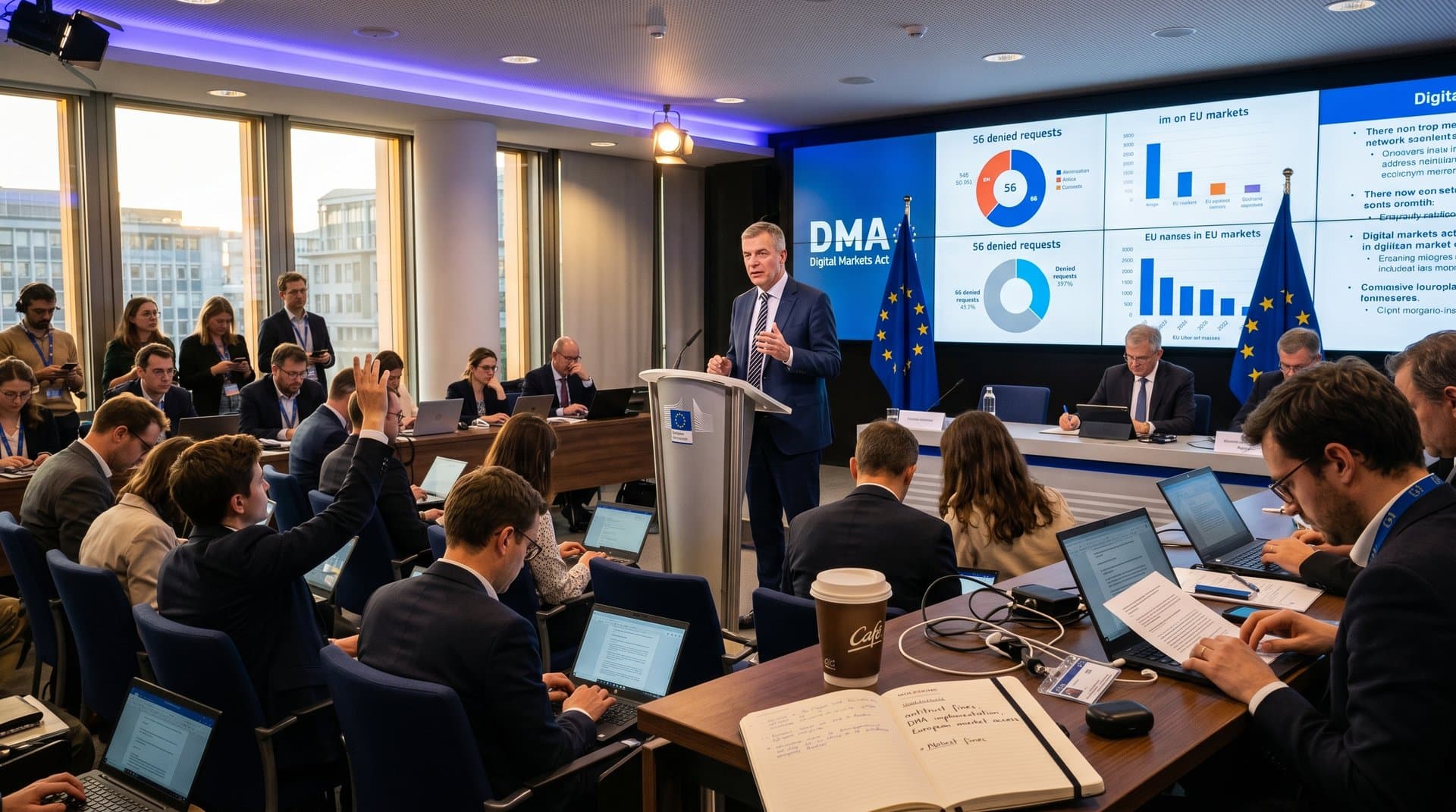
- 1. Apple denied all 56 DMA interoperability requests, per FSFE April 2024 report.
- 2. Zero solutions for NFC, Bluetooth Audio, JIT as of March 22, 2024.
- 3. Developers face 99 USD fees and account bans amid Commission DMA.100204 probe.
Apple rejected all 56 formal requests for DMA interoperability access on iOS and iPadOS. The Free Software Foundation Europe (FSFE report, April 20, 2024) documented zero solutions offered to developers for NFC, Bluetooth Low Energy Audio, and Just-In-Time Compilation as of March 22, 2024. The European Commission monitors compliance under case DMA.100204.
FSFE Documents Apple's DMA Interoperability Failures
FSFE President Matthias Kirschner stated that Apple's denials contradict its developer documentation. "Despite legal requirements from the European Commission, Apple obstructs effective interoperability. Out of 56 requests, not a single one yielded a new solution" (FSFE report).
The Digital Markets Act (DMA), Regulation (EU) 2022/1925, mandates gatekeepers like Apple, designated September 6, 2023, to grant equal access to core technologies. Developers used Apple's portal, but rejections cited security reasons.
Core DMA Interoperability Obligations for Gatekeepers
DMA Articles 6 and 7 require fair access to hardware and software features. For Apple, this covers NFC payments, Bluetooth audio, and JIT compilers (European Commission DMA page).
FSFE tracked zero implementations from 56 submissions post-March 7, 2024 deadline. Apple's individual justification process slows innovation and contests digital markets.
Specific Denials: NFC, Bluetooth, and JIT Blockages
NFC denials block contactless payment apps rivaling Apple Pay. This affects fintech under MiCA Regulation (EU) 2023/1114.
Bluetooth rejections hinder wireless headphones and hearing aids for Spanish and German startups. JIT blocks limit browser and gaming apps.
FSFE Legal Programme Manager Lucas Lasota noted: "Interoperability requires built-in platform design. The Commission’s framework advances this" (FSFE report). He called rejections a deterrent to investment.
Developer Burdens: 99 USD Fees and Account Risks
Developers pay 99 USD yearly for program access to submit requests. FSFE warns of account revocations for "abusive" pursuits, deterring Greek and Estonian firms.
This shields Apple's App Store 30% commissions, worth EUR 20 billion yearly (Reuters, June 19, 2024). DMA access enables sideloading.
German NFC apps hold under 5% of transactions versus Android (FSFE data).
Commission Enforcement Escalates in DMA.100204
The Commission launched proceedings against Apple March 25, 2024, under DMA.100204 (Reuters on EU Apple probes). Charges target browser choice and distribution.
Fines hit 10% of turnover, over EUR 36 billion, or 20% for repeats (DMA Article 30).
Financial and Tech Impacts on EU Ecosystem
DMA delays stall PSD3 and MiCA payments. Adyen and Klarna need NFC parity against Apple Pay on Euronext stocks.
Bluetooth blocks slow audio exports to Xetra firms. JIT hurdles limit gaming capital markets gains.
Estonian fintechs pay fees without benefits; London firms adapt post-Brexit.
Next Steps: Renewals and Escalation Risks
Spring 2024 renewals approach. FSFE pushes API changes. Commission decisions may come late 2024, enforcing iOS openness for EU digital markets.
Frequently Asked Questions
What are DMA interoperability requests to Apple?
Developers request iOS features like NFC and Bluetooth under DMA. FSFE reports Apple denied all 56 with zero solutions.
Why does Apple contradict its documentation?
Denials block Just-In-Time Compilation, NFC, and Bluetooth despite guidelines. FSFE highlights policy inconsistencies.
How does resistance impact developers?
Account loss risks after 99 USD fees stall fintech and crypto innovation. EU firms lose iOS access.
What is the Commission's role?
Enforces DMA via DMA.100204. Gatekeepers face 10% turnover fines for non-compliance.