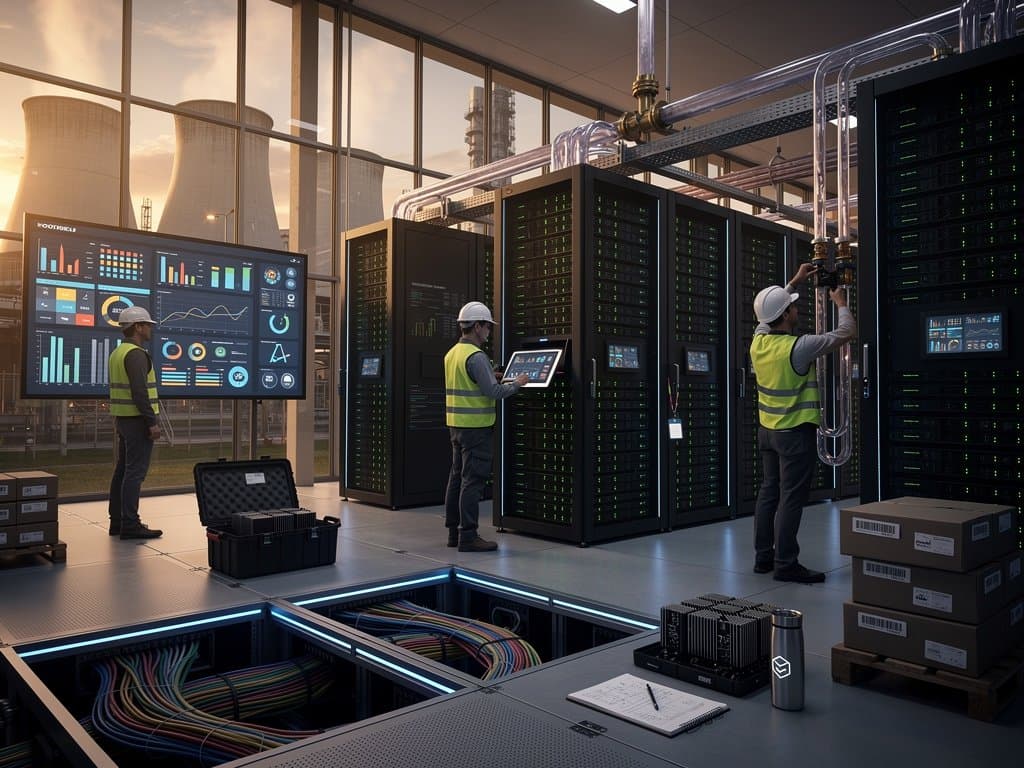
- 1. EU data centre capacity triples to 100 GW in five years.
- 2. €176 billion investments drive Big Tech's hidden expansion.
- 3. 10 legal experts cite violations of Aarhus Convention and EU law.
Investigate Europe detailed revealed on April 17, 2024, an EU data centres secrecy clause in the revised EU Energy Efficiency Directive (EED). The European Parliament and Council adopted it in October 2023. Operators must keep individual energy and water KPIs confidential, shielding €176 billion investments as capacity triples over five years.
A senior European Commission official emailed stakeholders in early 2024. Operators report metrics like power usage effectiveness (PUE) and water usage effectiveness (WUE). Public access limits to national aggregates. Hyperscalers Microsoft, Google, and Amazon Web Services (AWS) drive this expansion, consuming electricity equivalent to the Netherlands' annual usage.
Big Tech Lobbying Inserts EU Data Centres Secrecy into Law
Microsoft shaped the clause directly. European Commission documents show DG Energy copy-pasted Microsoft's proposed text verbatim into the EED draft. Investigate Europe coordinated the probe across nine countries with partners like The Guardian and Le Monde.
Bram Vranken, researcher at Corporate Europe Observatory, stated: "Who does the Commission represent: Big Tech or the public? This is shocking." This mirrors Digital Markets Act (DMA) patterns, where Article 102 fines hit billions yet energy reporting favors incumbents.
Tech giants claim site-level disclosure exposes trade secrets. Post-GDPR, the Commission courts data hubs via the Data Act. However, hidden KPIs undermine the European Green Deal's 55% emissions cut by 2030 and net-zero by 2050.
€176B Fuels Data Centre Capacity Tripling in Five Years
EU data centre capacity triples to over 100 GW by 2028, backed by €176 billion in private equity and hyperscaler capex, per McKinsey estimates. Facilities underpin AI models and cloud services vital to Europe's €500 billion digital economy.
The EED requires annual PUE and WUE reporting to national authorities like Germany's BNetzA or Ireland's CRU. Site-level data remains secret; only aggregates go public. The Commission's EED page confirms this structure without per-facility breakdowns.
Ireland hosts 25% of EU capacity, Sweden leads in green cooling. Without granular metrics, ESMA struggles to enforce sustainable finance rules under SFDR Article 8 disclosures.
10 Legal Experts Decry Aarhus and EU Law Violations
Ten EU legal scholars told Investigate Europe the EU data centres secrecy clause breaches the Aarhus Convention and EU transparency law. Professor Jerzy Jendrośka, Opole University, with 19 years on the Aarhus Compliance Committee, declared: "In two decades, I cannot recall a comparable case. This violates the convention."
Luc Lavrysen, emeritus professor at Ghent University and former Belgian Constitutional Court president, called it a "clear violation" of EU law and Aarhus Article 4. Katerina Peter, Aarhus Centre coordinator, added: "Public access to environmental information is fundamental."
| Expert | Affiliation | Key Criticism |
|---|---|---|
| Jerzy Jendrośka | Opole University | Violates Aarhus Convention |
| Luc Lavrysen | Ghent University | Breaches EU transparency rules |
| Katerina Peter | Aarhus Centre | Undermines public access |
| 10 total | EU universities | Masks high-impact sites |
Aggregates obscure outliers consuming disproportionate power.
Grid Strain and 8-10% Electricity Use by 2030
Hidden KPIs weaken enforcement amid surging demand. Data centres could consume 8-10% of EU electricity by 2030, per International Energy Agency (IEA) forecasts released March 2024.
AI training like GPT-4 equivalents demands hyperscale compute in Nordic hubs. Secrecy stalls renewable mandates. Bitcoin hit $75,384 (market cap $1.51 trillion) and Ethereum $2,348 on April 25, 2024, per CoinGecko data, underscoring parallel compute economics.
CoinGecko's Crypto Fear & Greed Index at 21 reflects regulatory fears. The ECB's May 2024 bulletin warns grid constraints could lift wholesale electricity prices 15-20% in peak hours.
EU Data Centres Secrecy Entrenches Hyperscaler Dominance
Secrecy denies benchmarks to European challengers like OVHcloud, entrenching US giants' 70% market share. Financial Times reported €50 billion in 2024 capex alone on April 20, 2024.
MEPs from Greens/EFA push amendments in the 2026 energy package. Aarhus Convention reviews start June 2024. Transparency battles will shape DMA enforcement and Capital Markets Union tech funding. EU data centres secrecy risks long-term grid stability and Green Deal goals.
Frequently Asked Questions
What secrecy does the EU Energy Efficiency Directive impose on data centres?
Operators report energy and water KPIs confidentially. Individual site data stays hidden, aggregates only public. Impacts €176B investments.
How did Big Tech secure the EU data centres secrecy clause?
Commission copy-pasted Microsoft amendment verbatim. Corporate Europe Observatory's Bram Vranken called it shocking.
Why do experts criticize the EU data centres secrecy clause?
10 scholars say it violates Aarhus Convention and EU transparency. Jerzy Jendrośka: no comparable case in 20 years.
What is the environmental impact of EU data centres expansion?
Capacity triples, consuming up to 10% EU power by 2030. Secrecy blocks site scrutiny, straining Green Deal.