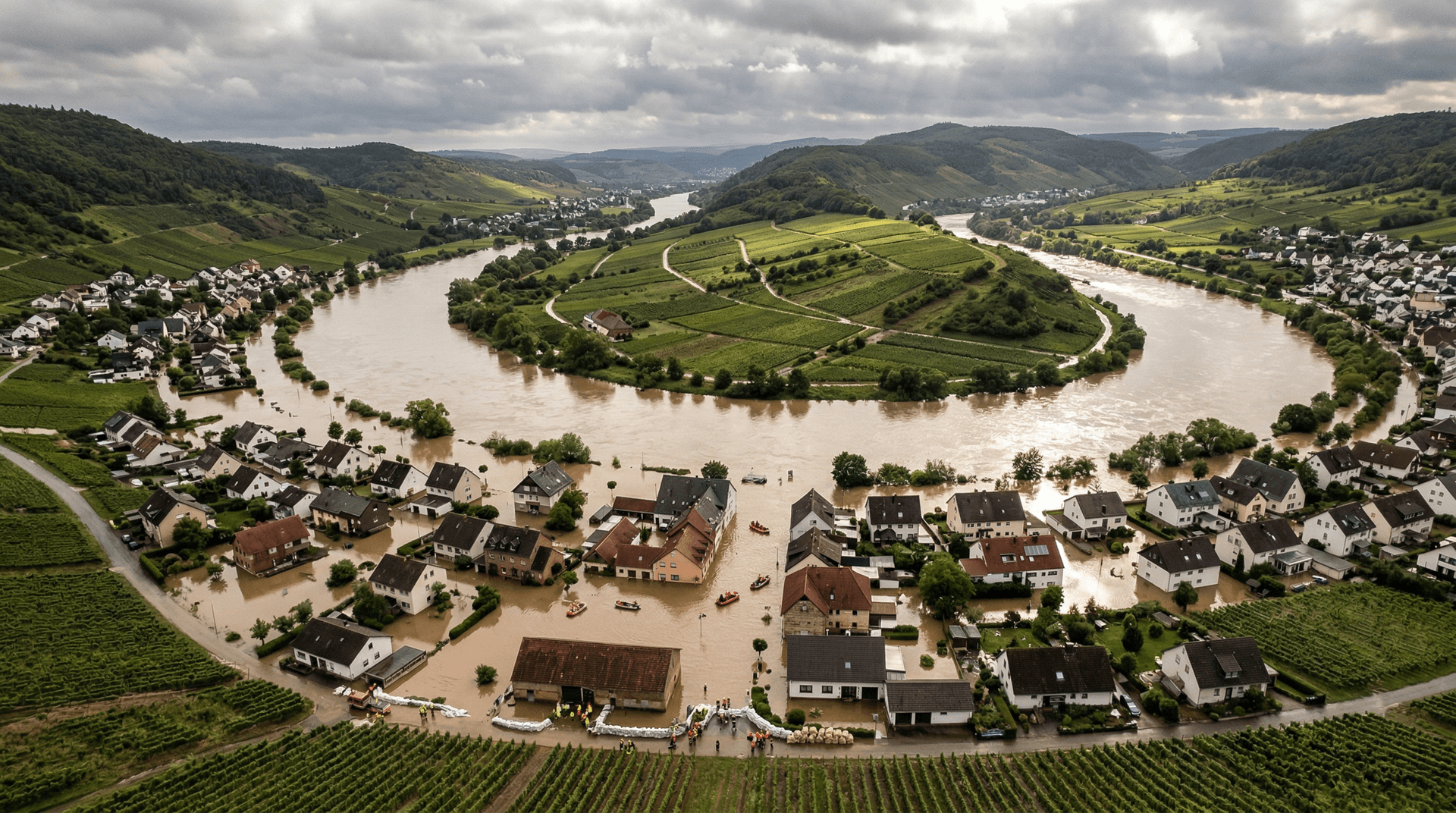
In the first week of March 2024, western Germany faced a deluge of biblical proportions as heavy rainfall swelled rivers and inundated communities. Regions along the Moselle, Rhine, and Saar rivers, particularly in Rhineland-Palatinate and Saarland, bore the brunt of the disaster. Over 300 residents were evacuated from their homes, roads were submerged, and emergency services worked around the clock to mitigate the damage. This event, occurring between March 3 and 6, marked yet another stark reminder of Europe's escalating battle against climate-driven extreme weather.
The Onset of the Crisis
Meteorologists attributed the flooding to an intense low-pressure system that dumped up to 100 millimeters of rain in just 48 hours across affected areas. The German Weather Service (DWD) issued severe weather warnings as early as March 2, predicting the worst. By March 4, water levels on the Moselle River near Koblenz reached critical heights, surpassing alert thresholds by several meters. In Trier and other towns, streets turned into rivers, stranding vehicles and prompting hasty sandbagging efforts by locals and authorities.
The impacts rippled beyond immediate flooding. Power outages affected thousands, rail services on key lines like the Koblenz-Trier route were suspended, and schools closed. Agricultural lands, already saturated from a wet winter, were submerged, threatening early crop plantings and livestock. Initial estimates from Rhineland-Palatinate's disaster management pegged economic losses in the millions of euros, with insurance claims expected to climb higher as assessments continue.
Government and Community Response
German authorities mobilized swiftly. The federal crisis management team coordinated with state governments, deploying over 1,000 firefighters and water rescue specialists. Bundeswehr troops assisted in pumping operations, while the German Red Cross set up emergency shelters. Environment Minister Steffi Lemke visited flood-hit areas on March 5, pledging federal aid and emphasizing the need for resilient infrastructure.
Local resilience shone through. In Traben-Trarbach, a picturesque Moselle wine town, volunteers formed human chains to reinforce dikes. "We've seen floods before, but this one's different—faster and fiercer," said resident Maria Schneider, whose family vineyard was partially underwater. Community halls became hubs for distributing essentials, fostering a spirit of solidarity amid the chaos.
Broader European Context
This wasn't an isolated incident. Similar heavy rains battered neighboring Belgium and the Netherlands, where the Meuse River also surged. In France's Moselle department, alerts were raised. Europe has endured a string of such events: deadly floods in Germany in 2021 killed over 180, and recent storms like Otto and Hans in late 2023-early 2024 battered the continent. The European Environment Agency (EEA) warns that climate change is amplifying these downpours, with a 7% increase in precipitation intensity per degree of warming.
The EU's Green Deal aims to address this through adaptation strategies. The 2023 Floods Directive update mandates better risk mapping, and the €1 trillion NextGenerationEU fund allocates billions for climate resilience. Yet, implementation lags. Germany's ongoing debates over dike reinforcements and floodplain restoration highlight tensions between development and nature protection.
Climate Change Connection
Scientists link these floods to human-induced climate change. A January 2024 World Weather Attribution study on European storms found that warmer air holds 7% more moisture, fueling heavier rains. Europe's 2023 was the hottest on record, with melting glaciers and saturated soils priming the ground for runoff. The IPCC's 2023 synthesis report stresses that without rapid emissions cuts, such events will become the norm.
In Germany, where 80% of the population lives near rivers, vulnerability is acute. A 2022 study by the Potsdam Institute for Climate Impact Research projected a 50% rise in flood risks by 2050 under moderate warming scenarios. Policymakers face pressure: farmers decry wetland protections that "worsen" flooding, while environmentalists argue restored ecosystems absorb water better.
Lessons and Looking Ahead
As waters recede by March 7, recovery begins. Damage surveys reveal collapsed bridges in Saarburg and eroded riverbanks. The federal government activated its flood aid program, offering up to €5,000 per household. Insurers like Allianz brace for claims mirroring the €40 billion from 2021 floods.
Experts call for investment in early warning systems. Germany's national water model, upgraded post-2021, provided crucial forecasts this time. EU-wide initiatives like Copernicus satellite monitoring offer real-time data, but gaps remain in rural areas.
The floods coincide with EU elections looming in June 2024, where climate will be pivotal. Parties like the Greens push for ambitious targets, while conservatives prioritize economic recovery. Public opinion, per a March 2024 Eurobarometer poll, shows 80% of Europeans view climate change as a serious threat.
Path to Resilience
Building back better means nature-based solutions: reforesting slopes, creating retention basins, and curbing sprawl. The Netherlands' "Room for the River" program, expanding floodplains, offers a model—reducing peak flows by 20%. Germany pilots similar projects along the Rhine.
Finance plays a role. The European Investment Bank green-bonds fund flood defenses, while private insurers innovate parametric payouts triggered by rainfall thresholds.
As March 2024 unfolds, Germany's floods remind us: adaptation is urgent. With spring planting ahead and summer droughts looming, Europe must balance mitigation and resilience. The continent's future hinges on turning crisis into catalyst for change.
(Word count: 912)