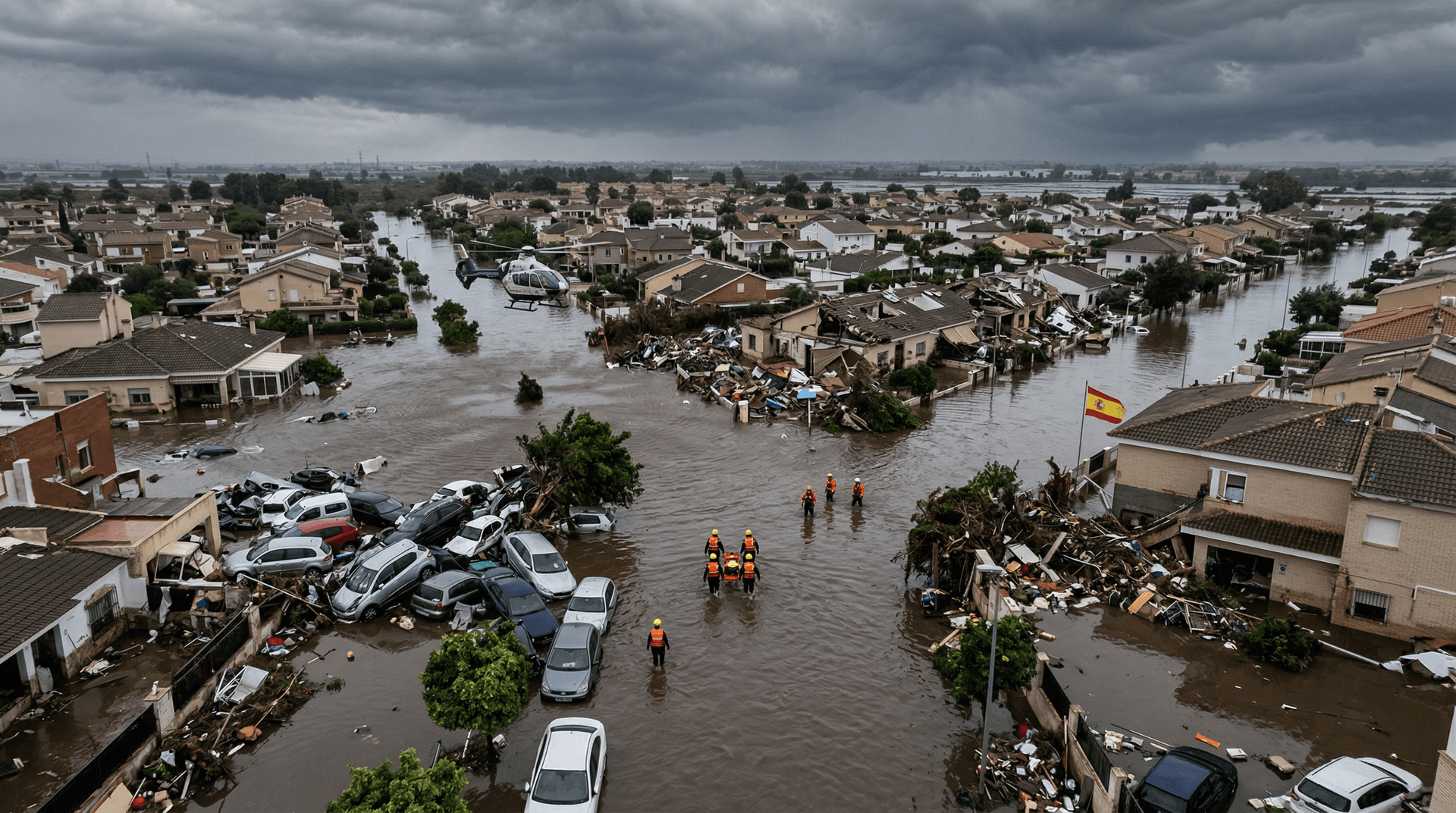
A Deluge of Unprecedented Scale
On October 29, 2024, a meteorological phenomenon known as DANA (Isolated Depression at High Levels) unleashed torrential rains on Spain's eastern coast, particularly devastating the Valencia region. By early November, the death toll had climbed to 223, making it the deadliest natural disaster in Spain since the 19th century. November brought not relief, but a grim accounting: over 10,000 homes destroyed, 56,000 vehicles ruined, and damages estimated at €25 billion ($27 billion). Towns like Chiva, Paiporta, and Aldaia were submerged under meters of mud and debris, with floodwaters peaking at 491 liters per square meter in just eight hours—equivalent to a year's rainfall.
As Europe World News reports from the ground in November 2024, recovery efforts intensified amid public outrage. Spanish Prime Minister Pedro Sánchez visited the disaster zone on November 4, pledging €2.5 billion in immediate aid. Yet, criticism mounted over delayed alerts; the national weather agency AEMET issued warnings, but local authorities claimed insufficient lead time. By mid-November, parliamentary inquiries were launched, with opposition parties accusing the regional government of negligence.
Climate Change: The Underlying Culprit
Scientists from the World Weather Attribution group, in a rapid analysis released November 8, 2024, linked the floods' intensity directly to human-induced climate change. Warmer Mediterranean waters, supercharged by global warming, fueled a storm system that dumped record precipitation. "This event was made at least 10% more intense due to climate change," stated Friederike Otto, a lead researcher. Europe's warming trend—1.5°C above pre-industrial levels regionally—amplifies such 'medicanes' (Mediterranean hurricanes), turning seasonal rains into biblical floods.
This fits a pattern across Europe. Just weeks prior, Storm Boris flooded central Europe, killing 24. Portugal faced Storm Aurore on November 9-10, with 100mm rains causing landslides. The European Environment Agency (EEA) warned in its November 2024 State of the Climate report that extreme precipitation events have increased 20% since 1980, with projections of 50% more by 2050 under current emissions.
Government and EU Response: Too Little, Too Late?
Spain activated the EU Civil Protection Mechanism on October 30, mobilizing aid from nine member states, including pumps and rescue teams from France and Italy. European Commission President Ursula von der Leyen visited Valencia on November 6, announcing €1.5 billion from the EU Solidarity Fund. "Europe stands with Spain," she declared, emphasizing the bloc's €1 trillion green investment plan.
Yet, gaps persist. Spain's early warning system, upgraded post-2019 failures, still faltered due to underfunding. The national meteorological service operates on a €100 million budget, dwarfed by needs. In a November 15 parliamentary session, Sánchez defended his government but promised a €500 million overhaul of flood defenses. Regional president Carlos Mazón resigned amid probes into alert delays.
EU-wide, the disaster spurred calls for action. On November 12, at COP29 in Baku, Spain's climate minister pushed for doubled adaptation finance, targeting €100 billion annually for vulnerable regions. The EU's Mission on Adaptation to Climate Change, launched in 2021, gained urgency, with new funds for AI-driven forecasting tools.
Human Toll and Economic Fallout
Beyond numbers, stories emerged of loss: families separated by raging torrents, elderly trapped in attics, and migrants in shantytowns bearing the brunt. By November 20, 2024, 5,000 people remained homeless, with psychological trauma widespread. Economists at BBVA Research forecasted a 0.3% GDP hit for Spain in 2025, straining Valencia's citrus and automotive hubs.
Insurance claims topped €4 billion, but many uninsured face ruin. Volunteer 'mud angels'—echoing Italy's 2014 efforts—cleared sludge, symbolizing community resilience. International aid poured in, including from the UK and US, highlighting transatlantic solidarity.
Lessons for Europe's Future
Valencia underscores Europe's vulnerability. The IPCC's 2022 report flagged the Mediterranean as a climate hotspot, with floods projected to double by 2100. The EEA advocates 'sponge cities'—green infrastructure absorbing water—and nature-based solutions like wetland restoration.
Tech innovations offer hope: AI models from ECMWF now predict DANAs 48 hours ahead with 80% accuracy. Drones mapped damage in Valencia, aiding relief. Yet, implementation lags; only 40% of EU flood directives are fully enacted.
As winter looms, with La Niña potentially worsening rains, Europe must act. The Valencia tragedy, unfolding through November 2024, demands not just aid, but systemic overhaul: robust warnings, resilient infrastructure, and aggressive emissions cuts. EU leaders at COP29 pledged net-zero by 2050, but Valencia cries for delivery now.
In the words of a Paiporta survivor: "The sea rose to swallow us. Climate change isn't future—it's here." Europe must heed this wake-up call before the next deluge.
Europe World News, November 20, 2024